
The History of Gotong Royong and Kerja Bakti: Indonesia’s Tradition of Mutual Cooperation and Why It Matters Today
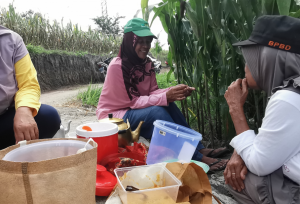 Every August, as Indonesia prepares to celebrate its independence, neighborhoods across the archipelago fill with the sound of brooms, hammers, and laughter. Streets get swept, gates get repainted, and communities work side by side without asking for payment. This is gotong royong and kerja bakti in action, and it is far older, and far more relevant, than most people realize. As Indonesia heads into another Independence Day under uncertain economic conditions, understanding the deep history of gotong royong and kerja bakti offers something practical: a working model of resilience that predates the nation itself.
What Gotong Royong and Kerja Bakti Actually Mean
Gotong royong comes from Javanese, where “gotong” means to carry or lift together, and “royong” means doing something collectively. Put together, it describes the act of working toward a shared goal as a group rather than as isolated individuals. Kerja bakti is the more concrete, everyday expression of that idea: a scheduled communal work session, such as cleaning a village drainage system, repairing a shared road, or preparing a neighborhood for a celebration.
The two terms are often used interchangeably today, but they describe different layers of the same tradition. Gotong royong is the underlying philosophy, while kerja bakti is the practice that brings it to life.
The Pre-Literate Roots of Gotong Royong
Historians trace the roots of gotong royong back to Indonesia’s pre-literate era, long before written records existed in the archipelago. In its earliest form, gotong royong involved shared physical labor for clearing farmland or building houses, organized informally around a respected elder who divided responsibilities among group members. This was not a formal government program. It was simply how agrarian communities survived, since planting, tending, and harvesting rice required more hands than any single family could provide.
This early pattern matches what anthropologists call peasant community structures, where rural, agriculture-based societies depend on constant reciprocal labor between neighbors, from sowing seeds to harvesting crops. Without gotong royong, subsistence farming in much of the archipelago simply would not have been possible.
Gotong Royong in the Hindu-Buddhist Era
As Hindu-Buddhist influence spread across the archipelago, gotong royong took on a new dimension. Communal labor was increasingly directed toward building and maintaining temples, known in Sanskrit-influenced tradition as seva, a form of religious service tied to constructing and sustaining candi, pura, and other sacred sites. Historian Sartono Kartodirdjo pointed to the Baru inscription from the tenth-century Mataram Kingdom as early evidence of organized communal labor, describing how local rulers and the maharaja mobilized communities to build temples across Java.
This period reveals something important: gotong royong was never purely secular. From its earliest documented forms, it carried a spiritual dimension, blending practical survival with religious devotion and social obligation.
Colonial Disruption: When Cooperation Became Coercion
The colonial era marked a troubling turn in this history. During Dutch colonial rule, the language and structure of communal labor were co-opted for forced labor projects, most infamously the construction of the Great Post Road across Java under Governor-General Herman Willem Daendels in the early nineteenth century, which relied on forced local labor under brutal conditions. This forced labor system, often remembered in Indonesian historical memory as “kerja rodi,” borrowed the outward form of communal work while stripping away its voluntary, reciprocal spirit entirely.
This distinction matters. It is the difference between a community choosing to work together and a colonial power compelling people to work under threat. Understanding this contrast helps explain why, after independence, reclaiming gotong royong as a genuinely Indonesian value became such a politically and culturally significant act.
Sukarno and the Elevation of Gotong Royong to National Philosophy
The most decisive moment in the modern history of gotong royong came on June 1, 1945, when Sukarno delivered his landmark speech to the BPUPKI, the Japanese-sponsored body tasked with preparing Indonesian independence. In that speech, he first proposed Pancasila as the philosophical foundation of the future Indonesian state, then offered a simplified version he called Trisila, and finally distilled everything into a single unifying idea he called Ekasila: gotong royong.
Sukarno argued that gotong royong was more dynamic than the more static idea of kekeluargaan, or familial kinship, because it captured shared struggle, shared sweat, and shared purpose. In his own words during that speech, he described the state he envisioned as a “gotong royong state,” built on labor performed together, sacrifice shared together, and struggle carried out together for the benefit of all. Although the full five-point Pancasila was ultimately adopted rather than the simplified Ekasila, that speech permanently linked gotong royong to Indonesia’s founding identity, not merely as a village custom but as a guiding national principle.
From Village Custom to National Identity
After independence, gotong royong moved beyond agrarian villages into schools, government programs, and civic life more broadly. Kerja bakti became a familiar routine nationwide, from communities cleaning irrigation channels to volunteers preparing neighborhoods for Independence Day celebrations each August. In many regions, particularly Minangkabau communities in West Sumatra, gotong royong remains deeply woven into cultural identity, reinforcing collective values that education, both formal and informal, continues to pass down to younger generations.
In the modern era, the meaning of gotong royong has continued to expand. It now extends beyond physical labor to collaborative problem-solving on social issues, environmental care, and community organizing more broadly. The Indonesian government has repeatedly positioned gotong royong as a pillar of national development, viewing it as a tool for strengthening unity and accelerating public programs.
Why Gotong Royong and Kerja Bakti Matter During Economic Uncertainty
This history is not just an academic curiosity. As Indonesia approaches another Independence Day against a backdrop of global economic pressure, rising costs, and uncertain business conditions, the underlying logic of gotong royong becomes strikingly practical again.
Historically, gotong royong has resurfaced most visibly during moments of hardship. During difficult economic periods and public health crises, Indonesians have organized fundraising concerts, charity auctions, and community relief efforts entirely through informal gotong royong networks, driven by humanitarian or religious motivation rather than any top-down mandate. The same underlying mechanism applies to today’s economic pressures.
For small businesses and local communities, several practical lessons emerge from this history:
Shared resources reduce individual risk. Just as farming communities pooled labor because no single family could manage a harvest alone, small business owners today can pool marketing costs, share distribution networks, or co-invest in local infrastructure rather than absorbing every cost individually.
Community trust lowers the cost of cooperation. The reciprocal trust built through generations of kerja bakti, where today’s help is repaid tomorrow, mirrors the kind of informal credit and support systems that keep local economies resilient when formal financing becomes harder to access.
Collective identity strengthens local branding. Sukarno’s insight that gotong royong is more dynamic than static kinship applies just as well to modern community and business networks. A neighborhood, market, or local industry that organizes around shared purpose, rather than pure individual competition, tends to weather downturns more effectively.
Voluntary cooperation outperforms forced compliance. The colonial-era distortion of communal labor into coerced “kerja rodi” is a permanent reminder that the value of gotong royong lies entirely in its voluntary nature. Businesses and local governments trying to revive community cooperation today succeed only when participation is genuine, not mandated.
A Tradition Built for Uncertain Times
What makes gotong royong and kerja bakti remarkable is not that they are uniquely Indonesian customs frozen in the past, but that they were built, from the very beginning, as tools for surviving uncertainty. They emerged in pre-literate farming communities facing unpredictable harvests. They were reclaimed by a nation founded in the middle of a world war. They resurface, again and again, whenever formal systems struggle to meet urgent needs.
As Indonesia marks another Independence Day amid economic headwinds, the lesson from this long history is straightforward. Long before gotong royong became a philosophical pillar of the republic, it was simply what communities did when they needed to get through hard times together. That instinct has not disappeared. If anything, it may be exactly what today’s uncertain economy calls for.